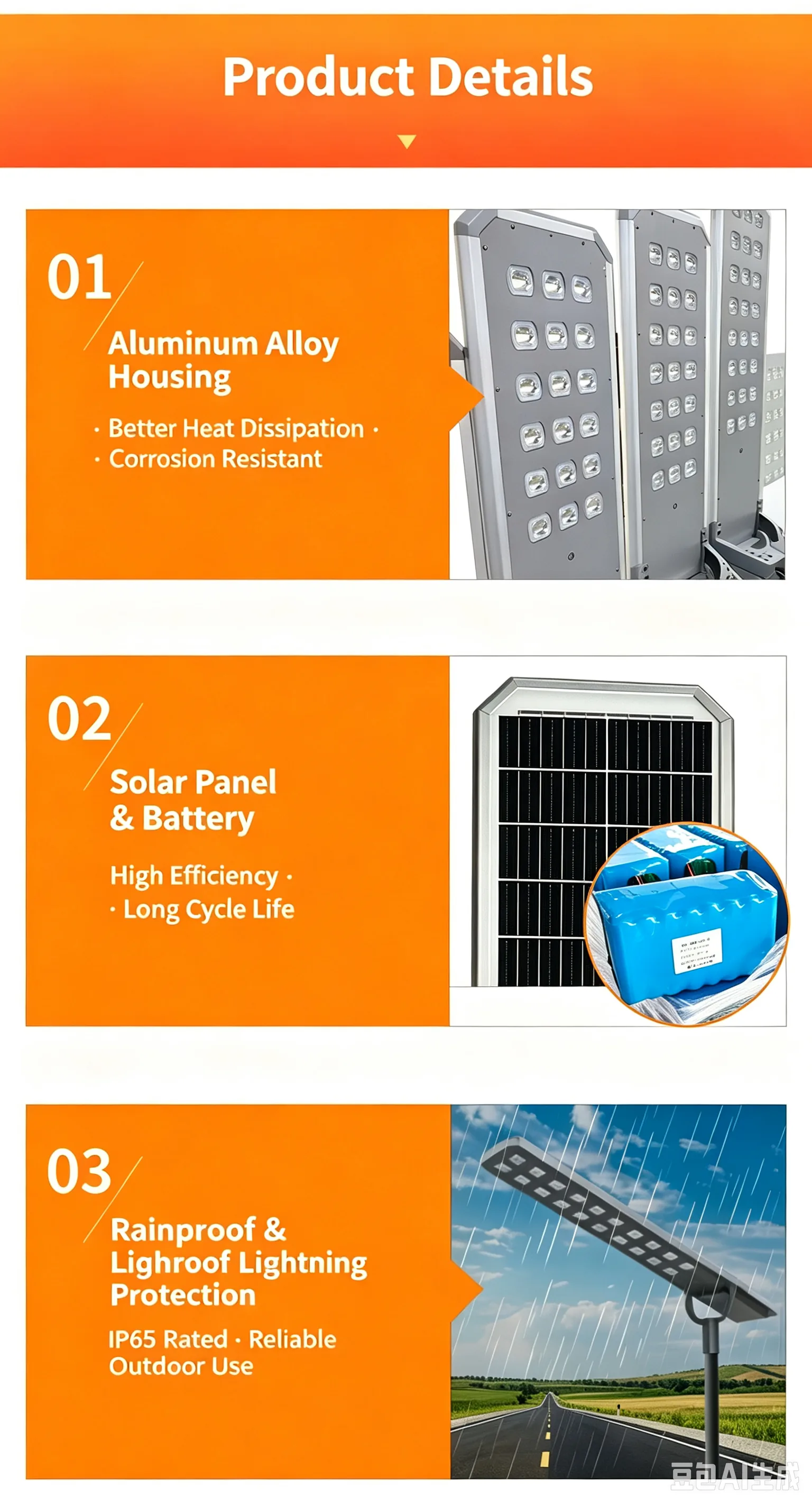
How to Choose the Right Integrated Solar Street Light for Your Project
Five practical inputs that determine the correct wattage, panel and battery configuration — before you request a quotation.
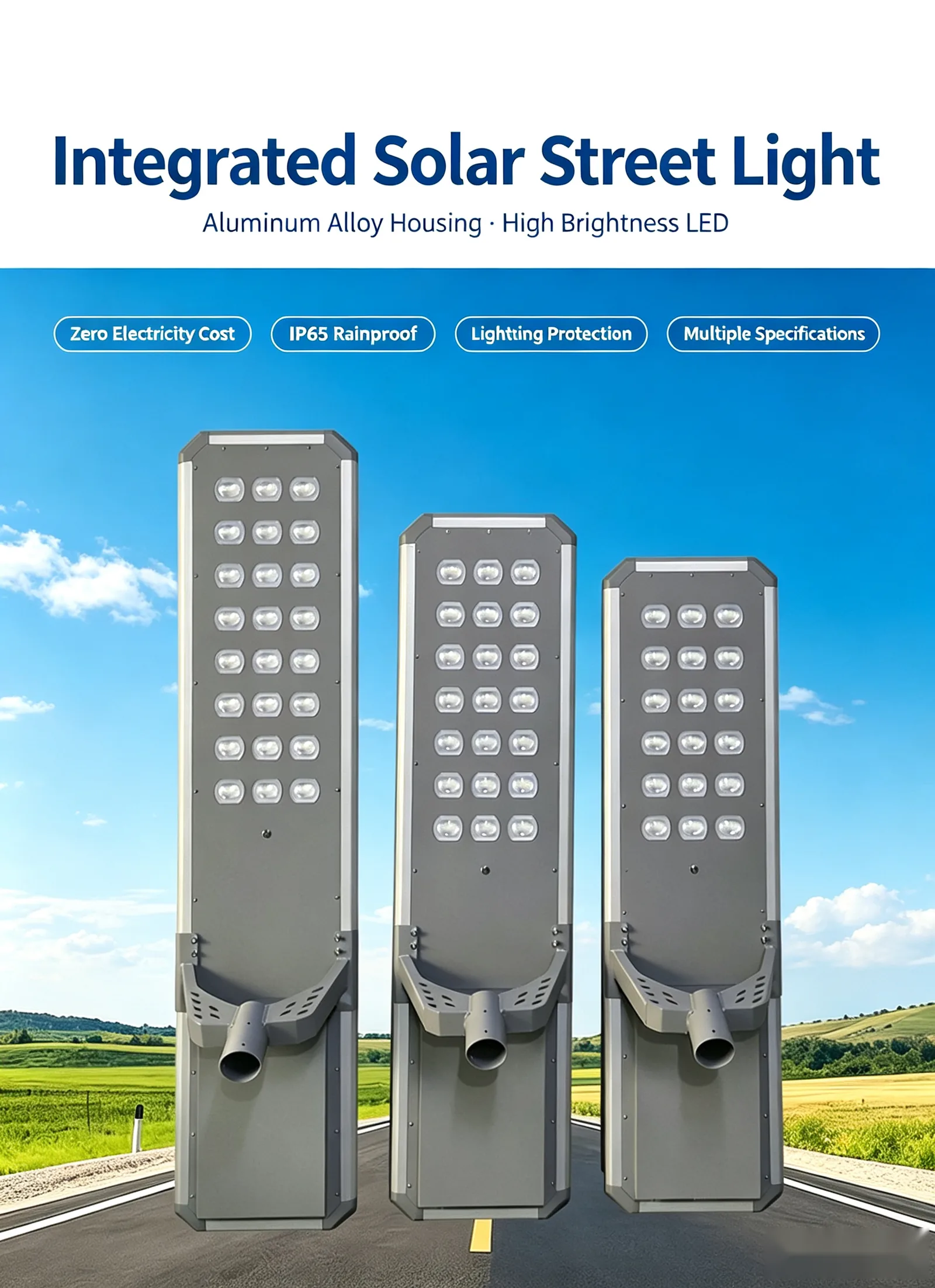
An integrated solar street light combines the solar panel, LED module, LiFePO4 battery and intelligent controller in one housing. Choosing the right model is not about picking the biggest wattage — it is about matching the light to the road, the site and the operating schedule.
1. Road width and pole height
Road width and pole height determine the beam pattern and mounting height you need. A narrow community road and a two-lane county road require different optics and mounting geometry.
2. Operating hours and autonomy
Define full-power hours per night and the number of rainy-day autonomy days. This directly drives battery capacity and panel wattage.
3. Local sunshine conditions
Country and site latitude affect solar yield. We size the panel according to the project location rather than applying one standard configuration.
4. Control and protection needs
Decide between light control, time control and sensing options, and confirm the required ingress protection (IP65/IP66) for the installation environment.
5. Quantity, branding and documentation
Order quantity affects MOQ and lead time; OEM branding, packaging and certificates (CE, RoHS and destination-specific documents) are confirmed with the quotation.